
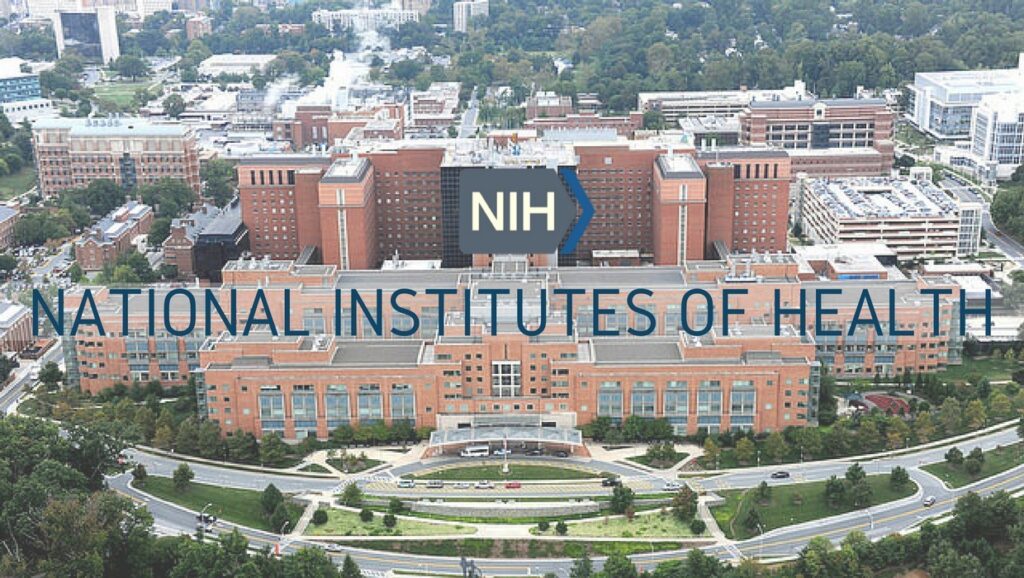
In an attempt to encourage or facilitate growth in new and emerging biotechnology companies, the National Institutes of Health (NIH) began the Small Business Technology Transfer (STTR) program. The program began as a pilot program by the Small Business Technology Transfer Act of 1992. It has since been extended several times such that the program is still receiving funding over 30 years later.
This is a highly competitive program aimed to offset the research and development costs barrier that is often associated with commercializing new products. This form of non-dilutive funding has been a great resource to help small businesses overcome startup and early-stage funding deficits. Funding at this stage, sometimes referred to as Death Valley, helps support companies when business operations have begun but little to no revenue has been generated. Within the last 3 years, one small business, StemCultures, LLC, located in Rensselaer, NY was a recipient of this funding.
How does STTR Funding work?
In order to be eligible to apply for STTR funding, the company must qualify as a small business per the NIH requirements (13 CFR 121.702). Typically, this requires the business to be an established for-profit institution that is more than 50% owned by US citizens and employs fewer than 500 employees. A unique aspect of the STTR program is that it requires the applicant to have a partnership with a nonprofit research institute that will also be listed in the application.
STTR Funding is broken into two Phases. The first Phase is the smaller of the two ($50,000 – $250,000 for 1 year) and serves as proof of concept project. This goal is to assess the ability of the small business to perform the aims outlined in their application. Phase 2 is a continuation of the project started in Phase 1. Typically, only those that receive a Phase 1 award are allowed to apply for Phase 2. Phase 2 projects last two years and are around $750,000 – $1.9 million in funding.
How long does it take to receive a notice of award after applying?
The NIH STTR grant funding process is thorough and extensive. Typically, the process takes 6-12 months from proposal to award, but can be longer or shorter depending on several factors. Once a proposal is submitted, it undergoes a peer review study session. In these sessions, proposals are scrutinized for feasibility, accuracy, and need. Proposals that rank well in the peer review sessions may move on to the Just In Time (JIT) process where the NIH will request additional information from the company. Unfavorable proposals can be resubmitted once edits to the proposal have been made.
What kind of projects can I apply for?
The NIH funds discoveries, particularly in the life science and biomedical space, aimed to improve the lives of patients and their families. To see what types of projects have recently been funded, view their portfolio. Success stories can also be viewed on the NIH Seed website.
StemCultures’ NIH STTR Funding Journey
For-profit and non-profit collaboration
StemCultures is a for-profit organization that specializes in the manufacture of controlled-release growth factor technology. Their products help support stem cell research by overcoming short protein half-lives, eliminating the need for daily medium changes, saving time and money, and creating happier cells. They work closely with the non-profit institute, the NeuraCell CORE facility, to develop new controlled-release products. In 2021, StemCultures and NeuraCell collaborated to create a revolutionary new controlled-release product, DISC devices. DISCs allowed their StemBeads technology to reach new 3D cell culture markets. Their 10 years of collaboration make them perfect candidates to apply for STTR funding.
NeuraCell, part of the Neural Stem Cell Institute, is a non-profit contract research facility. They specialize in working with induced pluripotent stem cells, neural progenitor cells, Schwann cells, adult retinal pigment epithelial cells, and everything you need to growth them. They also specialize in the production of 3D organoids and other molecular tools services.
StemCultures project and timelines
Due to their rich history and extensive backgrounds in both cell culture research and biomanufacturing, StemCultures and NeuraCell were awarded the Phase I STTR award in the fall of 2021. Their project was titled Controlled-release Microbeads to Replace Growth Factors in Fetal Bovine Serum. The Phase I project completed at the end of 2022. For this project, four growth factors were selected and encapsulated into microbeads to help cellular proliferation without the need for animal serums. More information about this project is available here.
With the successful completion of Phase 1, StemCultures and NeuraCell were awarded a Phase 2 award in April of 2023. The goal of the Phase 2 project is to further develop and encapsulate growth factors to replace animal serums. More information about the project is available here. The project is currently finishing up its first year of funding. With that, StemCultures and NeuraCell are hopeful for the successful completion of the project.
—
Note: Opinions and accounts expressed herein are those of the author(s) or interviewee(s). They may not reflect those of StemCultures, its officers, or directors.