
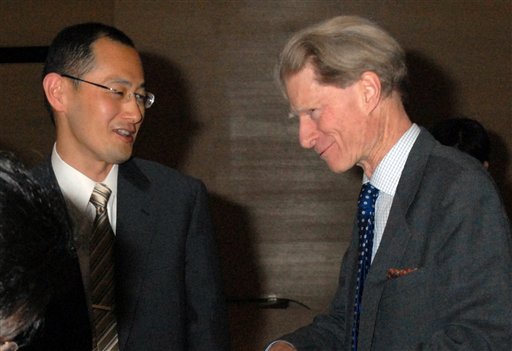
The Nobel Assembly at Karolinska Institute awarded the Nobel Prize in physiology or medicine to John B. Gurdon and Shinya Yamanaka last October 8, 2012. While it’s been a few months since this happened, we wanted to honor these two brilliant men by writing about them today. The award was given “for the discovery that mature cells can be reprogrammed to become pluripotent” as stated in the institute’s press release. Or in lay terms, turning an old established cell, into a very young, naive cell. By introducing genetic information from these younger cells, into the older ones, a transformation, or reprogramming occurs creating a whole new way we can now approach regenerative medicine.
A Backward Frog Leap from Adult to Tadpole
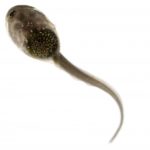 Sir John B. Gurdon is a 79 years old British scientist from Gurdon Institute, Cambridge United Kingdom. He is also affiliated with University of Oxford, University of Cambridge and California Institute of Technology. Sir John is a developmental biologist and was famous in the field for his pioneering research in nuclear transplantation and cloning.
For a long time, it has been believed that a specialized cell is purely committed to its fate and cannot be transformed into a different type of cell. Like other successful scientists, Sir John B. Gurdon questioned this dogma and hypothesized that ” its genome might still contain all the information needed to drive its development into all the different cell types of an organism”. He tested his hypothesis by taking a nuclei (containing the genetic information) from the somatic cell taken from the intestine of a Xenopus tadpole. This nucleus was then used to replace the nuclei of another frog’s egg cell. The egg then remarkably developed into a fully functioning cloned tadpole. The experiment was repeated several times after and they have successfully yielded adult frogs. This pioneering work led directly to the cloning of Dolly the Sheep by Ian Wilmut in 1996 and the more recent work of Shinya Yamanaka who shared in the Nobel Prize with Sir John.
Along with this incredible achievement, Sir John’s career should serve as an inspiration to us all as his school teacher when he was 15 in a letter wrote, “ I believe he has ideas about becoming a scientist; on his present showing this is quite ridiculous, if he cant learn simple Biological facts he would have no chance of doing the work of a Specialist, and it would be sheer waste of time, both on his part, and of those who have to teach him.” Wow. I guess he showed him huh? We all encounter doubters and negative people in life, but if you believe in something, they should never stop you. Think about if he let these negative words stop him from being a scientist. The future of medicine, particularly stem cell research would be a lot less promising.
All you Need is a Few Pairs of Genes
Shinya Yamanaka is a Japanese physician and researcher of adult stem cells. He is currently the director of Center for iPS Cell Research and Application and a professor at the Institute for Frontier Medical Sciences at Kyoto University.
Yamanaka was interested in finding the genes that keep embryonic stem cells immature (or young). Using mouse embryonic stem cells first, Yamanaka and his team identified 24 key genes they deemed important for this process. Going along the road Sir John Gurdon took, Yamanaka and his team introduced these genes in various combinations to fibroblasts (somatic or older mature cells) to see if he could transform them into an embryonic like cell. Unbelievably this worked, and then from 24 genes, the team narrowed them down into four genes that are Sox2, Oct4, Klf4 and c-Myc. With the correct recipe, they were able to generate induced pluripotent stem cells (iPSC). Using these iPSCs, his team then showed they could generate viable mice from these cells, successfully showing these cells truly mimicked an embryonic stem cell. Later on, Yamanaka repeated this work with human cells, and successfully reprogrammed adult fibroblast cells to an embryonic like state.
What is the significance here? Well, embryonic stem cells can turn into all the cell types of our body. In the science world, we say these cells have the highest “potential”, that is, they can give rise to the most things. Adult stem cells have limited potential, and tend to only turn into very few cell types. Embryonic stem cells though are derived from an embryo, and that brings a whole set of moral and ethical concerns that must be met before any therapies can be thought about. In addition, embryonic stem cells will not genetically match a sick patient, so even if the correct cells can be made, if we put them into a patient, they might be rejected as foreign. Now, we can take a skin cell from anyone (no embryos involved), reprogram it into these high potential iPSCs, and then turn them into the cells that are sick. So lets say for Parkinson’s disease, we can turn them into the dopamine neurons that are dying. Then, we can transplant genetically matched cells into the sick patient, and hope to alleviate the symptoms. Quite remarkable.
We are Getting There

Photo from MyHero.com
Together, these researches have led us to one of the biggest breakthroughs in medicine since the discovery of DNA. I know everyone out there is expecting big things from stem cell research in terms of the diseases stem cells can cure and this work gets us thousands of steps closer. We are close…not there yet, but close and we have no doubts that within our lifetime, we will see diseases treated from the technology and work described by these two brilliant men.
Congratulations again!
For further information on the studies of these two Nobel awardees, you can check out their key publications:
Gurdon, J.B. (1962). The developmental capacity of nuclei taken from intestinal epithelium cells of feeding tadpoles. Journal of Embryology and Experimental Morphology 10:622-640
Takahashi K., Yamanaka S., (2006). Induction of pluripotent stem cells from mouse embryonic and adult fibroblast cultures by defined factors. Cell 126:663-676
If you enjoyed this post, please consider subscribing below to our monthly newsletter through which we provide stem cell scientists information on the most current research topics and tools to help them constantly improve their stem cell culture experience.
[widgets_on_pages]
To Successful Research,
StemCultures
Information for scientists by scientists on all things related to stem cell growth including stem cell culture, culture medium, tissue culture, fibroblast growth factor (fgf2) and more.
Note: StemCultures facilitates posting on this blog, but the views and accounts expressed herein are those of the author(s) or interviewee(s) and not the views or accounts of StemCultures its officers or directors whose views and accounts may or may not be similar or identical. StemCultures, its officers and directors do not express any opinion regarding any product or service by virtue of reference to such product or service in this blog.