
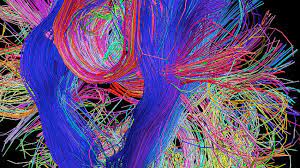
In a time where revenue, jobs, and healthcare seem to be the topics of most political and even social conversations, I found myself as a scientist right in the mix again with the latest announcements from President Obama regarding the Brain Activity Mapping Project (BAM). As a neuroscientist, I can’t tell you how excited I am about this possibility, and how strongly I believe that an endeavor like this will really change the medical landscape. Now, maybe I’m biased, and there a lot of people out there poo-pooing this project the president has proposed. However, if it’s more jobs, more revenue, and better healthcare that we want, this project is exactly what the doctor ordered…no pun intended.
Before we go into the benefits of this proposal, let’s talk about what is being proposed. The brain is the world’s most complicated computer. Think about what it does every second of every day. Not only does it control all of our daily functions, like breathing, pumping our heart, seeing, hearing, talking, walking, running, going to the bathroom, knowing if something is too hot or too cold, etc. It also controls our consciousness, our thought, our ability to choose, our emotions, all the things that make us human. The brain consists of billions of nerve and glia cells that make up infinite numbers of connections. How they all link up and exchange information and how they arise from one single neural stem cell during early development are still great mysteries. While the BAM details have not yet been fully announced, the gist is similar to the Human Genome Project, and it is assumed that the costs will be similar: around $3 billion over ten years, offering $300 million per year for research.
Why now? Good question. I’m not sure I have the exact answer, but I think I have a good idea. Again, it comes down to our three main points: job creation, increased revenue, and better healthcare. Let’s first look at the financial impact.
In the president’s plan and the media, this proposal has often been compared to the Human Genome Project. And I think it should be. Let’s look at the jobs and revenue aspects alone. From 1990 to 2003, the government invested $3.8 billion (that’s about 0.1% of the total federal budget) into genomic research. By 2010, genomic research generated an economic impact of $796 billion—a 141:1 return on investment. Or, in simpler terms, for each dollar Uncle Sam put in, he got back $141. Pretty darn good.
Let’s look at some more numbers. In total, the genome project produced 3.8 million job-years of employment, or one job-year for each $1,000 invested. Personal income generated exceeded $244 billion, averaging out to $63,700 income per job-year. In 2010 alone, genomics directly supported more than 51,000 jobs and indirectly supported more than 310,000 jobs, according to a Battelle Technology study. This created $20 billion in personal income and added $67 billion to the US economy.
And not just scientists are benefiting. The government makes out pretty well too. In 2010, tax revenues returned to federal, state, and local governments from genetics related jobs equaled more than $3.7 billion in federal taxes and $2.3 billion in US state and local taxes. So, in terms of job creation and revenue generation, if the BAM project is even one-tenth as successful, it will be a great investment.
You might argue that investing a substantial amount of money in any research sector will yield similar results—so why neuroscience? First off, in 2012, neurodegenerative disease research received $1.5 billion in funding. Cancer research received $5 billion, and HIV/AIDS research received around $3 billion. Clearly we can invest more. Let’s dive in a bit deeper. Many nervous system disorders affect patients when they get older, around age 65. Neurodegenerative disorders, in particular Parkinson’s and Alzheimer’s diseases, receive the most attention. The baby boomer generation is just starting to turn 65, and last I looked, there were about 75 million of them. That’s 75 million people all reaching their middle 60s at once. Looking at Alzheimer’s alone, it is expected that one out of eight people will get it; that means about seven million new patients. Currently, Alzheimer’s disease is the sixth-leading cause of death in the United States. Each year, it kills more Americans than breast and prostate cancer combined. Last year, Alzheimer’s and other forms of dementia cost families, insurers, and the government $172 billion. In 2050, researchers estimate, Alzheimer’s will cost more than $1 trillion. Again, that is only one disease.
Along with possibly relieving these diseases, this BAM project will increase funding for mental health research, always a hot-topic issue. More and more people are starting to realize that mental health disorders are real sicknesses, not just people demanding attention. In the wake of these crazy, horrible mass murders we keep seeing, people go back and forth on gun law changes, but one common theme that always seems to be overlooked is that a lot of these murderers have mental disorders. We really don’t know much about mental disease. Most of the medications people take are very dirty, affecting multiple systems in the brain. Sure they “work” a bit, but ask scientists exactly how and we can’t give you a straight answer. I’m pretty sure this is a major reason behind the government pushing through this BAM proposal, and I applaud the president for that.
There has been a mixture of emotions and responses from the different members of the scientific community. Some say that this project is incomparable to the Human Genome Project and is way too ambitious given the current financial landscape. And sure, the conspiracy theorists are always active, questioning the underlying motive of this project, which may be used for military and defense purposes. Should the project be a success, it could open doors to finding ways to control the human brain. I think that’s kind of funny. On the other side, many members of the scientific community share the goals, hopes, and visions of the federal government. They support the project, believing that it will lead to unlocking better understanding of neurological illnesses such as autism and Alzheimer’s disease. They also expect that the success of the endeavor will provide better advanced treatment procedures for such illnesses. I share this view.
The bottom line is that our government should want to find ways to improve the life of its citizens through scientific explorations and in doing so promote jobs and careers in the scientific sector. Whether you believe in the BAM project or not, if you have ever known anyone with a severe neural disease or disorder like Alzheimer’s or schizophrenia, I’m sure you can agree we need some help finding cures and better medicines. And for people my age—our parents are reaching their 60s, so this might hit home sooner we think.
If you enjoyed this post, please consider subscribing below to our monthly newsletter through which we provide stem cell scientists information on the most current research topics and tools to help them constantly improve their stem cell culture experience.
[widgets_on_pages]
To Successful Research,
Stem Culture
Information for scientists by scientists on all things related to stem cell growth including stem cell culture, culture medium, tissue culture, fibroblast growth factor (fgf2) and more.
Note: StemCulture facilitates posting on this blog, but the views and accounts expressed herein are those of the author(s) or interviewee(s) and not the views or accounts of StemCulture its officers or directors whose views and accounts may or may not be similar or identical. StemCulture, its officers and directors do not express any opinion regarding any product or service by virtue of reference to such product or service in this blog.