

Biomanufacturing, in its simplest sense, is any type of product creation that requires biological or chemical components. This includes the production of textiles, plastics, cosmetics, detergents, immunotherapies, food ingredients, and viral derived products. Because of this, biomanufacturing can serve a wide range of industries that these types of products support.
The History of Biomanufacturing
Alongside the industrial revolution, biomanufacturing has seen 4 major revolutions. Premodern biomanufacturing started several thousand years ago with the integration of fermentation using bacteria. This created products such as beer, cheese, wine, bread, and vinegar, the most simplistic biomanufactured products that still exist today.
The first three major biomanufacturing revolutions (spanning the 1910s to just before the 2000s) largely relied on the discovery and implementation of aerobic fermentation and genetic modifications. In the 2000s, biomanufacturing underwent its most current, fourth revolution (sometimes now referred to as advanced biomanufacturing), where tissue engineering, [stem] cell culture, and advanced protein engineering have become the forefront.
As biomanufacturing has advanced, so too have the businesses developing biomanufactured products. Now, companies focus on creating products that support the newest biological revolution.
Supporting the Fourth Biomanufacturing Revolution
StemCultures, located in Rensselaer, NY, is one such company that produces products to aid in cell culture research. Founded in 2012, in the midst of the newest revolution, the company found a solution to a common problem faced with stem cell culture: the need for daily feeding.
StemCultures manufactures controlled-release growth factor technology to overcome short protein half-lives in culture. Some proteins (ex. GDNF) have half-lives of 45-minutes! By extending protein half-lives, feeding schedules are reduced and the quality of the cells produced is significantly improved. Their products have advanced with the biomanufacturing revolution they were born out of.
The company’s patented StemBeads and DISC Device products are manufactured in the United States and shipped to research laboratories and companies all over the world. StemCultures recognizes the critical role they are playing as a biomanufacturing company in supporting the niche field of cell culture research.
Biomanufacturing: An Insider’s View
As a specialized biomanufacturing company, StemCultures and its employees understand the ins and outs of biomanufacturing processes. We sat down with Laboratory Manager, Victoria Bull, to get her insights on the topic.
How do you feel StemCultures fits into the biomanufacturing space?
StemCultures incorporates biological materials into new technologies that aid in research. Most of our functions rely heavily on biology and chemistry to develop our commercialized products, which is the unique aspect of biomanufacturing.
What does a typical day of manufacturing look like for you?
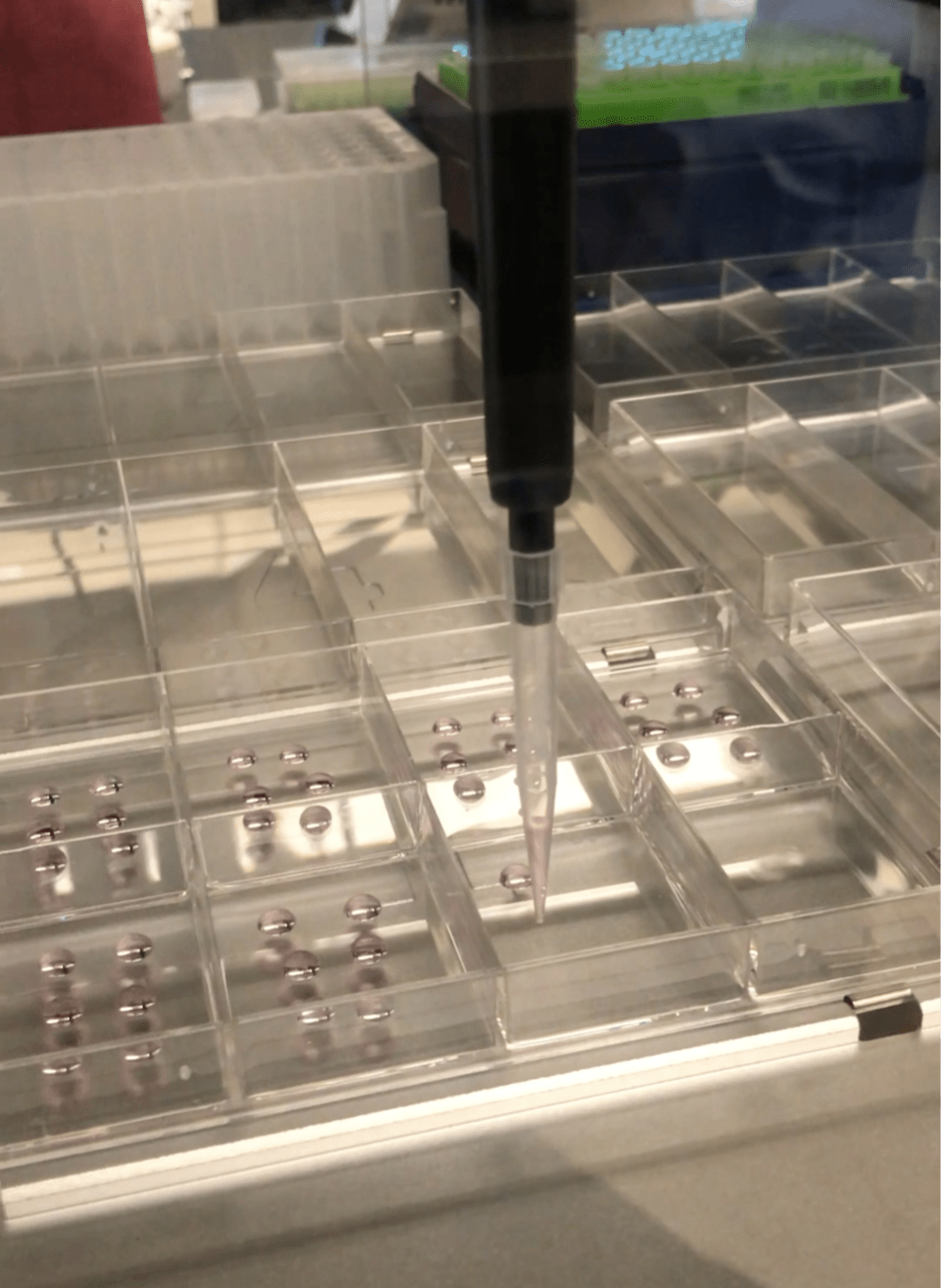
A typical “day of manufacturing” is hard to define since our protocols can span several days. The days before we want to manufacture, we start by reading the appropriate standard operating procedure (SOP) to see what solutions need to be prepared ahead of time. On the morning of manufacture, we continue preparing any other solutions that must be used within a certain time frame. We prep the manufacturing space and then manufacture according to the protocol, ensuring that we implement proper aseptic techniques throughout every step of the process. After manufacturing concludes, we must complete the appropriate post-manufacturing steps and documentation. The rest of the quality control process takes place over the next few days and weeks.
How would you describe the difference between biomanufacturing and other non-bio related manufacturing?
The main difference is that we incorporate biological materials as raw materials for our products, which are later used downstream in live cultures. Due to this factor, we have to give special attention to maintaining sterility throughout the entire process.
What are the ways you work to make manufacturing more efficient?
Luckily, we can use our inefficiencies to make ourselves more efficient in the sense that we learn a lot from our mistakes and experiment with new methods. The strategies that work best are the ones we implement. We also try to automate steps in our manufacturing process whenever we can.
What tips would you give someone looking for a career in biomanufacturing?
The most important thing anyone looking for a job in biomanufacturing should prioritize is gaining laboratory experience. Having good aseptic technique and hands-on laboratory experience is invaluable for people starting their careers in biomanufacturing. You can get this experience either in an academic or industrial environment. I would not say there are specific job types that people should apply for. Instead, look for biomanufacturing companies, then see what jobs they have available.
What are the challenges you encounter in biomanufacturing? Are there any challenges that are unique to biomanufacturing?
Our biggest challenge is overcoming human error. Most of our manufacturing and quality control requires very precise measurements and timing that can be easy to mix up – humans are not perfect! However, we have fortunately been able to develop checks and balances to eliminate this risk as much as possible. Although these challenges are faced in other types of manufacturing, I think the most unique challenge to biomanufacturing specifically is the consideration we must make for the biological applications of our products. Typically, this comes with more rigid quality control and government regulations that can be challenging to work through.
—
Note: Opinions and accounts expressed herein are those of the author(s) or interviewee(s). They may not reflect those of StemCultures, its officers, or directors.