
This is our second post in a series entitled The Life of a Stem Cell Scientist where we are interviewing stem cell scientists from around the world. Our last post was with a post-doctoral fellow in New York City.
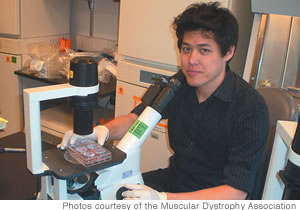
For this post, we interviewed 35-year-old Justin Ichida, PhD, who is an Assistant Professor who runs a regenerative medicine and stem cell research laboratory at the University of Southern California. The research in his lab is focused on understanding how genetic and environmental factors contribute to human neurodegenerative disease.
StemCultures: Where did you attend undergraduate/graduate school? When?
Justin: Undergraduate: University of California Los Angeles (2000) – Major in Microbiology and Molecular Genetics. Graduate: Harvard Medical School for PhD (2007) – Studied genetics at Harvard but in a chemical/molecular biology lab focusing on the origin of life.
StemCultures: What attracted you to the field of stem cell science?
Justin: Believe it or not, I read the book Jurassic Park in 7th grade and was enamored with the idea of being able to manipulate cells and create new types of cells. The book made me aware of the fact that there is a DNA code in every cell and amazing things can be done with them. I eventually really specialized in wanting to study reprogramming of cells and how stem cells actually change.
StemCultures: What is the specific field of stem cell science that you focus in?
Justin: I use stem cells and reprogramming to study neurodegenerative diseases like Amyotrophic Lateral Sclerosis also known as Lou Gehrig Disease and also Dementia.
StemCultures: How long have you lived in Los Angeles?

Justin: I have only lived here for 7 months, but I previously lived here for 4 years during my undergraduate studies. I spent time in Boston in between.
StemCultures: What is the biggest challenge of being a stem cell scientist?
Justin: It used to be funding but that’s not the case anymore. Now, I would say the biggest challenge is trying to validate our use of stem cell based models as a way to study and cure human disease. It makes a lot sense that it would work but we need to be able to validate it on a human patient. Until then there will always be skeptics that will say stem cell research is not valuable. The biggest challenge is getting the funds to bring the products to clinical trial. The California Institute of Regenerative Medicine (CIRM) is trying to help with this, but it will still be very challenging for stem cell scientists. It takes a tremendous amount on financial resources to bring a product to clinical trial.
StemCultures: What is the biggest challenge of being a stem cell scientist in LA?
Justin: I believe the biggest challenge of being a stem cell scientist in LA is also one of the biggest advantages. There aren’t too many stem cell labs or young stem cell scientists in LA, most of them go to Boston, New York, or San Francisco. Therefore the resources with respect to scientists to hire are limited, however on the flip side when younger scientists are available in the area, it easier for us to hire and retain them because the competition is low due to the small number of labs here.
StemCutures: What is your typical day/week like?
Justin: I usually arrive in the lab at 10 am and leave at midnight. I spend most of my day in meetings (3 on average) and also on grant writing, meeting and managing the staff, and administrative items such as protocols, preparation for classes, etc. Then in the evening I try to do some experiments and research.
I do always come in on the weekends as well when I am not visiting my girlfriend who lives in Hawaii.
StemCultures: What advice do you have for other young stem cell scientists trying to build a career in LA?
Justin: Get in contact with a lab that you are interested in and start working there; that is really the best training. You will get hand on training. You also want to keep up to date on the industry literature and always attend the annual ISSCR meeting to network with other stem cell scientists.
StemCultures: What is/are your ultimate career goal(s) as a stem cell scientist?
Justin: I want to do something that impacts somebody’s life positively. Whether it is therapeutic and affects someone’s life or academic and forces people to think differently about stem cell research. This is important to me.
StemCultures: You work 14 hours per day. You dedicate your life to stem cell research. What keeps you going?
Justin: Like everyone else I want to succeed, but as a stem cell scientist there is that added motivation knowing that you can really change people’s lives and that is a MAJOR MOTIVATOR for me.
I envision success for me to get a product through FDA approval and into the hands of patients.
If you enjoyed this post, please consider subscribing below to our monthly newsletter through which we provide stem cell scientists information on the most current research topics and tools to help them constantly improve their stem cell culture experience. [widgets_on_pages]
To Successful Research,
StemCultures
Information for scientists by scientists on all things related to stem cell growth including stem cell culture, culture medium, tissue culture, fibroblast growth factor (fgf2) and more.
Note: StemCultures facilitates posting on this blog, but the views and accounts expressed herein are those of the author(s) or interviewee(s) and not the views or accounts of StemCultures its officers or directors whose views and accounts may or may not be similar or identical. StemCultures, its officers and directors do not express any opinion regarding any product or service by virtue of reference to such product or service in this blog.