
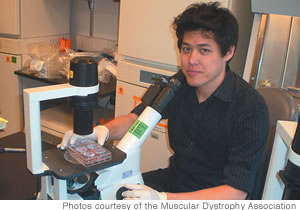
There is a 15-year-old boy, a freshman in high school, who lives down the block from me. Over the past few years, I have gotten to know him and his family well. On occasion, I help him with his science homework, and he then tells me about his science classes.
 As a scientist, I often think back to my younger years of schooling (elementary through high school) and try to remember what science class was like. Was it boring, was it fun, was I fascinated, intrigued? While I do not remember the details, I do know that science was the only thing I ever “got,” so naturally I went that way. But science is an easy thing to veer away from. Science can be incredibly boring when presented in a stale, monotone fashion. In addition, some topics can be boring because they are outdated. Important, of course, just outdated. We should try to incorporate new areas of science into the curriculum so kids can stay current and learn about cutting-edge technology.
What about stem cell biology and stem cell research? Stem cells have the potential to revolutionize medicine as we know it. Don’t you think this is something that young high school kids should be learning about? I do not know all the facts about or challenges around the integration of stem cell science into a high school curriculum, but I know that it has happened in some areas. I was reading that the State of California, through a California Institute of Regenerative Medicine (CIRM) program, has made an effort to get more stem cell classes into high school to educate younger kids. Nationally, I’m not sure of the numbers, but from what I know, stem cells are typically mentioned in science class—and that’s really about it.
On that note, this boy recently told me he had learned about stem cells in his high school biology class. I was wowed to hear it. I asked what he had learned. He responded, “My teacher said stem cells are taken from human embryos.” I put my head down and shook it. If this is what that class is being told about stem cells and stem cell science, it is such a shame. Not only is the statement false and misleading, its tone propagates stereotypes about the field of stem cell research being synonymous with abortion. Not good. We need to do a better job of educating young people on important, creative areas of science through fact, example, and engaging, fun lectures.
If anyone out there knows where others and I can get more information on stem cell biology/science in younger education curricula, please comment and let us know.
If you enjoyed this post, please consider subscribing below to our monthly newsletter through which we provide stem cell scientists information on the most current research topics and tools to help them constantly improve their stem cell culture experience. [widgets_on_pages]
To Successful Research,
Stem Culture
Information for scientists by scientists on all things related to stem cell growth including stem cell culture, culture medium, tissue culture, fibroblast growth factor (fgf2) and more.
Note: StemCulture facilitates posting on this blog, but the views and accounts expressed herein are those of the author(s) or interviewee(s) and not the views or accounts of StemCulture its officers or directors whose views and accounts may or may not be similar or identical. StemCulture, its officers and directors do not express any opinion regarding any product or service by virtue of reference to such product or service in this blog.