

Cell tissue culture has drastically advanced scientific research since it was discovered in ***. As cell culture advanced, so too did the methods by which to provide the cells with nutrients. In the late 1950s, the first commercial synthetic medium (Eagle’s Minimal Essential Medium) was created, further advancing the industry. Its original formula contained glucose, inorganic salts, amino acids, vitamins, and blood serum. Since then, this original formula has been modified to fit specific cell types. Today, there are dozens of different media scientists can purchase for cell culture maintenance.
Basic media components and why they are important
Although media can be customized to fit specific cellular needs, all cells require the same basic nutrients to survive.
- Energy: sourced from carbohydrates or sugars and is required to sustain cellular metabolism.
- Essential metals and minerals: such as calcium, magnesium, iron, and other trace metals are required to regulate metabolic pathways and cellular processes.
- Buffering agents: phosphates, acetates, and citrates maintain pH level, neutralizing acidification arising from metabolic activity.
- Nutrients: composed of proteins (or their building blocks: peptides and amino acids) or growth factors necessary to maintain cellular pathways and signaling. This component of media varies based on cell type and can be tailored to fit a specific need.
Media may also contain other ingredients such as indicators for pH change, selective antimicrobial agents, and gelling agents that facilitate cell culture practices. Although not directly affecting cellular proliferation, these media components impact cell culture performance.
Media for stem cell growth
Induced pluripotent stem cells (iPSCs) are one of the most rigorous cell types to grow. They require daily, routine maintenance that often still results in low yield. To help overcome this, several companies have developed stem cell specific media. These media contain an important factor for stem cell maintenance, FGF2 or Fibroblast Growth Factor 2. FGF2 is responsible for keeping stem cells in their stem cell state, preventing them from differentiating into unwanted cell types. However, FGF2 has a very short half-life, degrading rapidly in culture media.
Scientists need to replenish stem cell media daily because of this rapid protein degradation. Over the last couple of years, several companies have worked to find a way to prevent the degradation of FGF2 over time. Some have done so by thermally altering the protein structure. However, scientists question the downstream genetic implications of using altered, unnatural proteins. Luckily, other companies have found a way to slowly release unaltered proteins over time in media. By preventing FGF2 degradation through slow-release technology, stem cell culture efficiency increases drastically, creating a media truly designed to optimize cell culture research.
Find the cell culture media that fits your needs
You’ve likely already found a media that works well for your research—but you can optimize your process efficiency by incorporating known, controlled growth factor levels. Controlled-release media additives provide an innovative solution for maintaining consistent growth factor levels in your cell cultures. This approach allows you to use your preferred media while benefiting from continuous replenishment of essential growth factors—no daily feeding required!
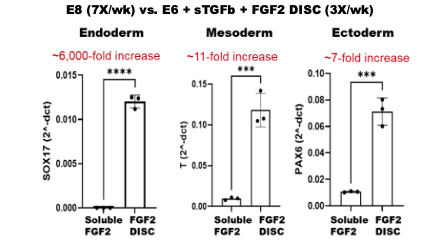
Across different stem cell media backgrounds, we observed improved directed differentiation efficiency when hPSCs were cultured with FGF2 DISCs (and reduced feeding) prior to differentiation (above).
For those who prefer a unique and simplistic approach, you can create custom media by starting with a base media that includes all the essential nutrients. Then, add a slow-release version of the growth factors your specific cell type requires. StemCultures offers a wide selection of slow-release growth factors tailored to meet the needs of diverse cell types. Explore our range to find the perfect fit for your research and elevate your cell culture outcomes.
—-
Note: Opinions and accounts expressed herein are those of the author(s) or interviewee(s). They may not reflect those of StemCultures, its officers, or directors.
Information for scientists by scientists on all things related to stem cell growth including stem cell culture, culture medium, tissue culture, fibroblast growth factor (fgf2) and more.